Mar 2024
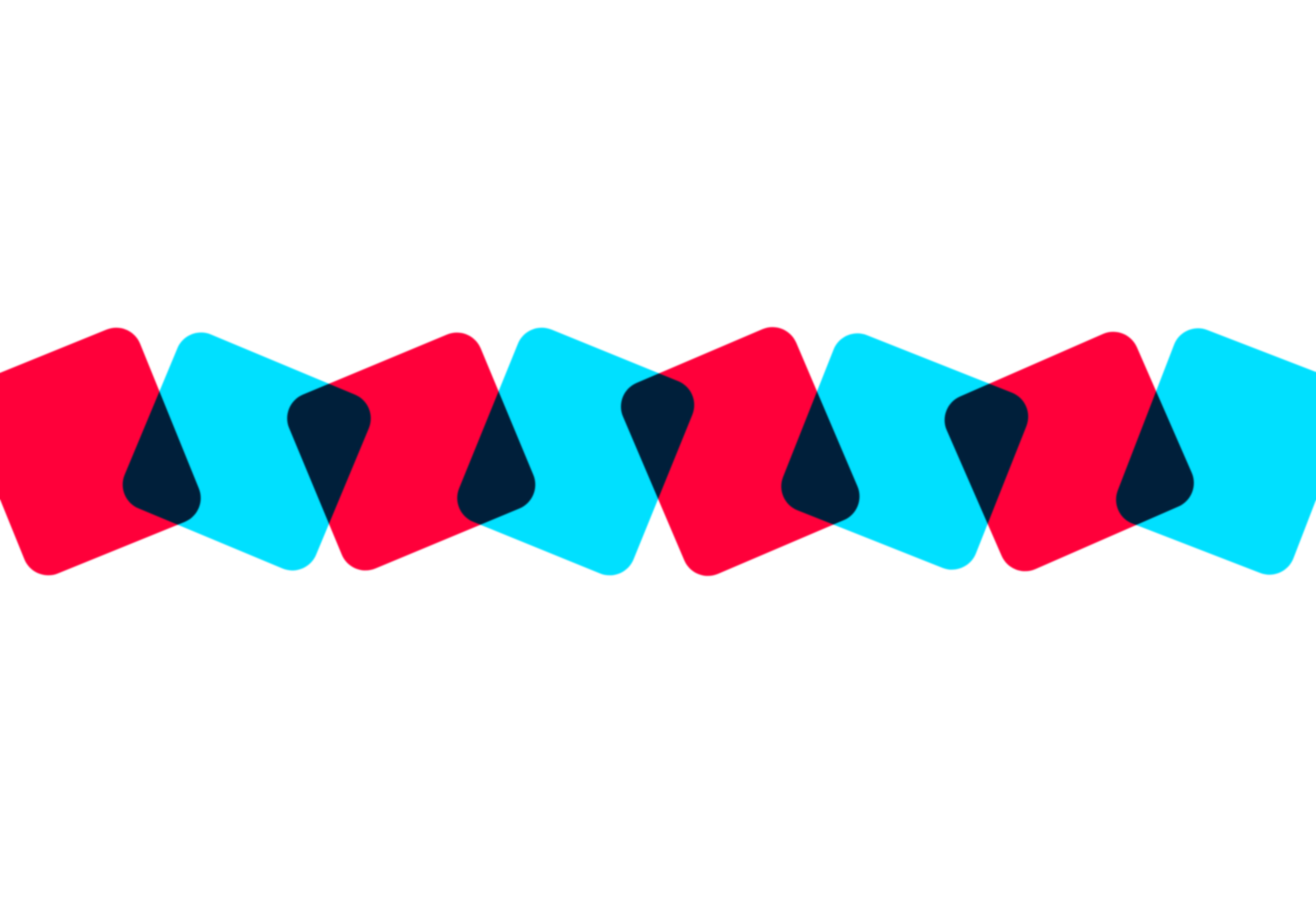
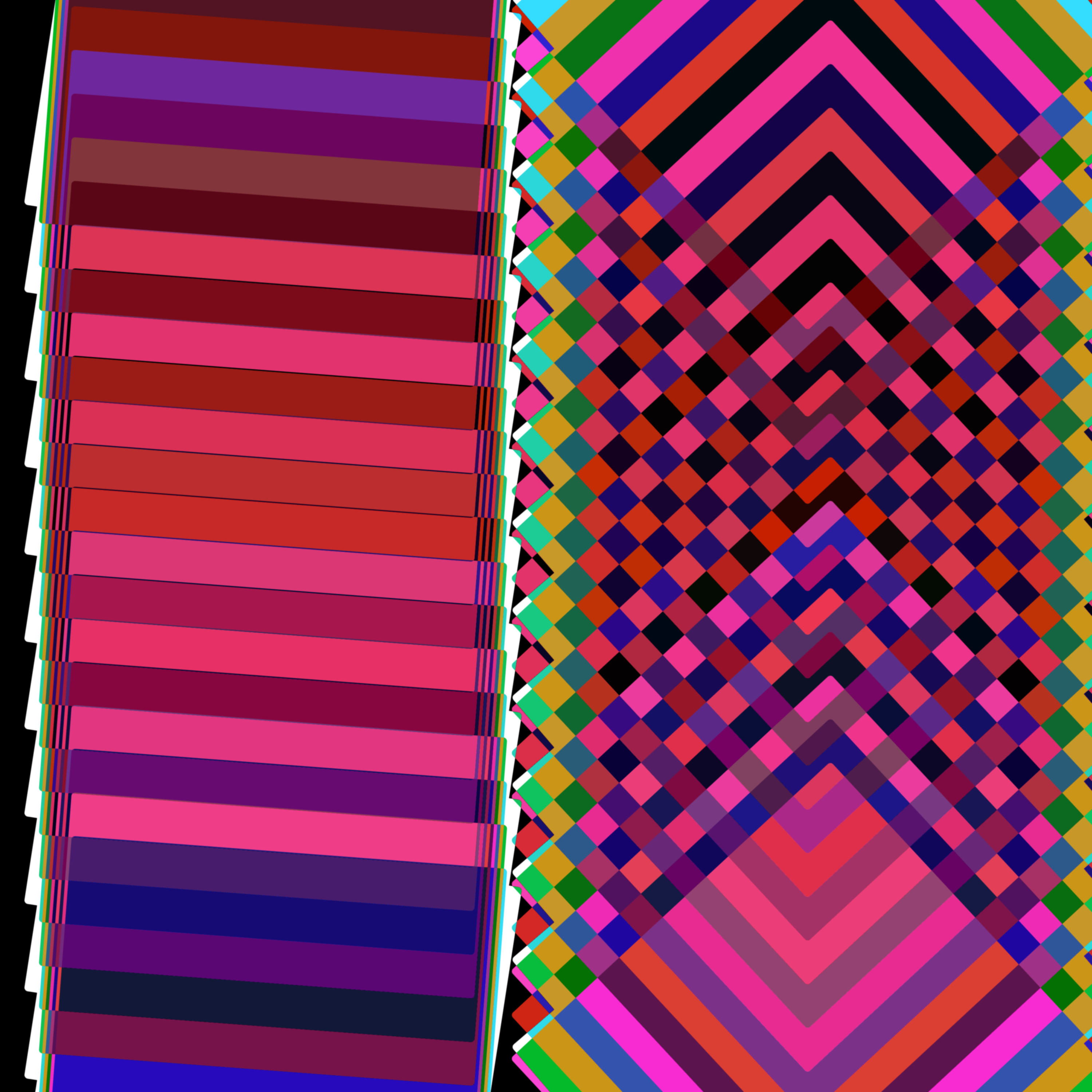
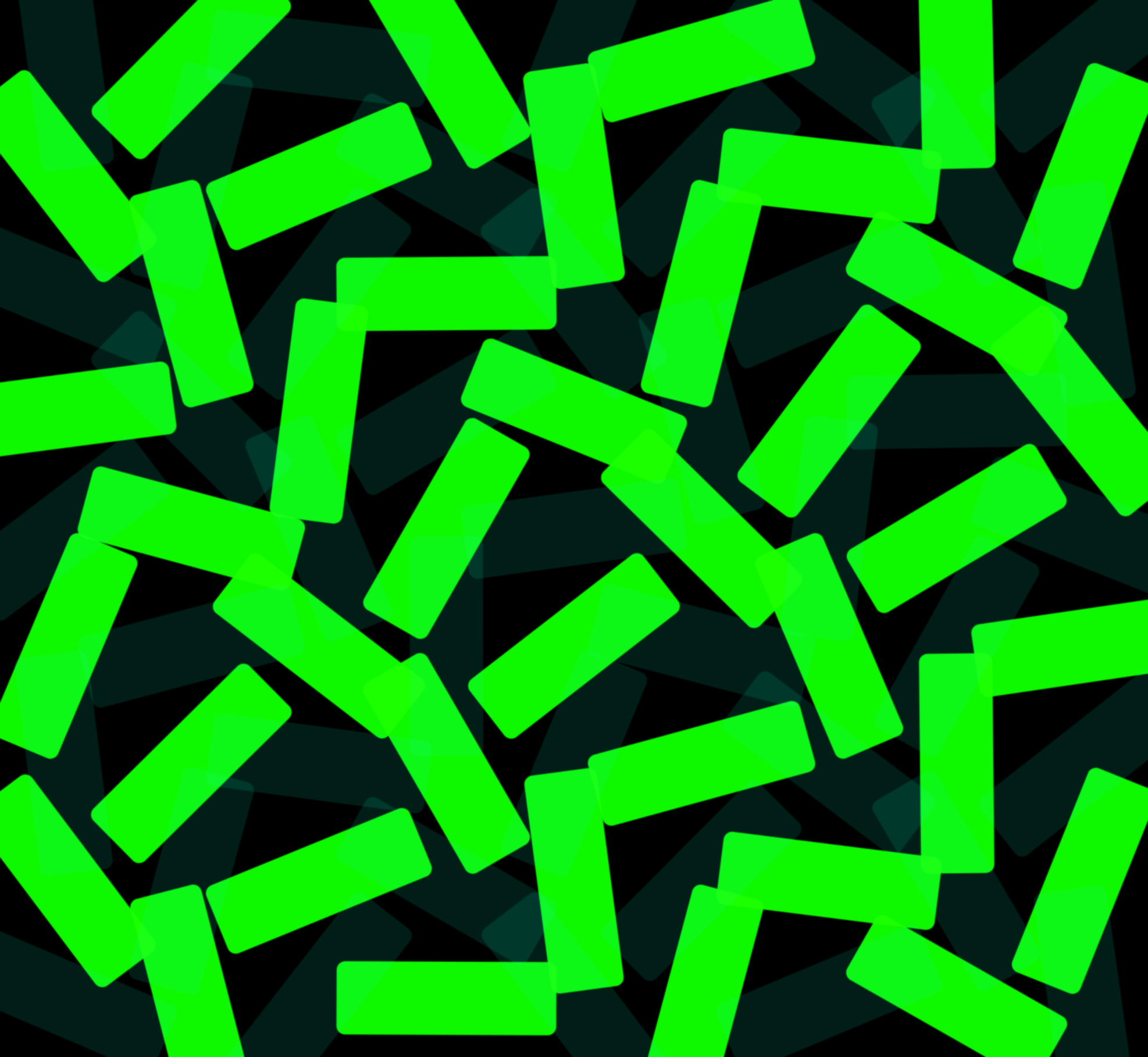
The foundation of Tumbling is just a grid of rectangles. Each rectangle is rotated a bit from its vertical and horizontal neighbor. I played around mostly with the spacing of each row and column, the size of the rectangles, and how much each rectangle was rotated from its neighbors.
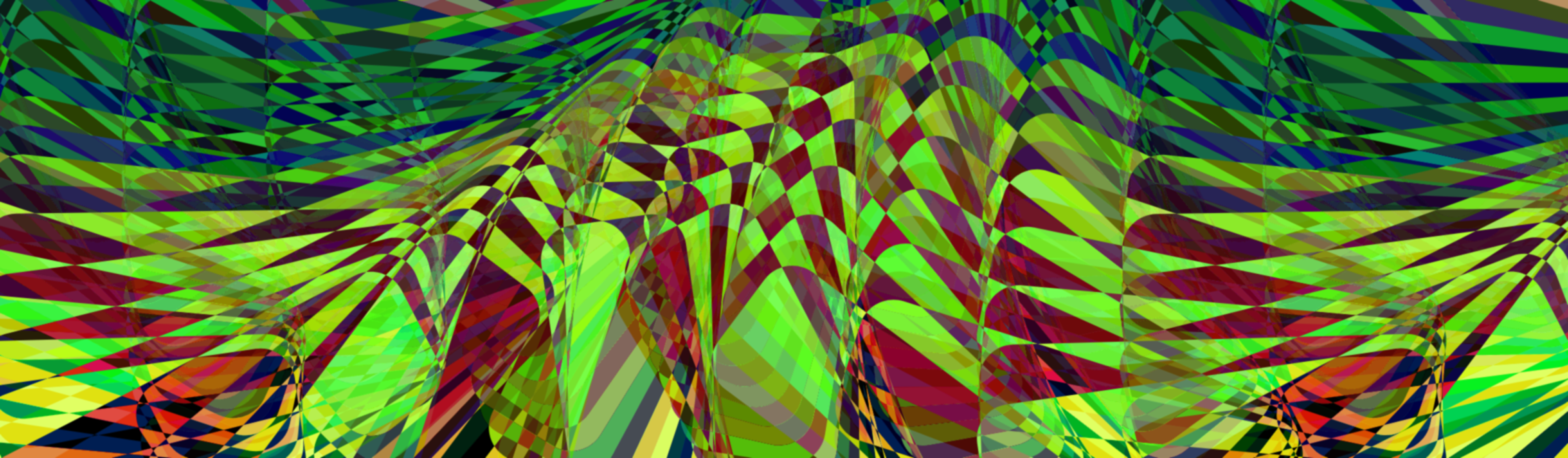
Much of the complexity in Tumbling came from overlapping colors. When two rectangles of different color overlap, I was able to choose whether the resulting color was 1) additive, 2) subtractive, 3) a blend, or 4) something totally random.
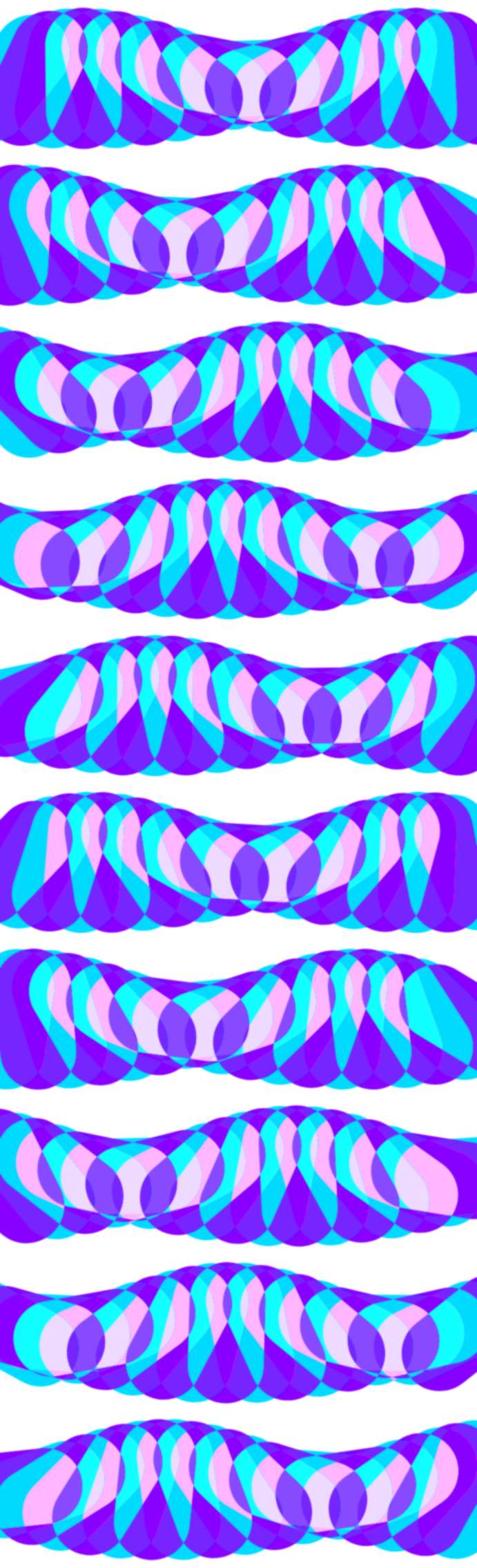
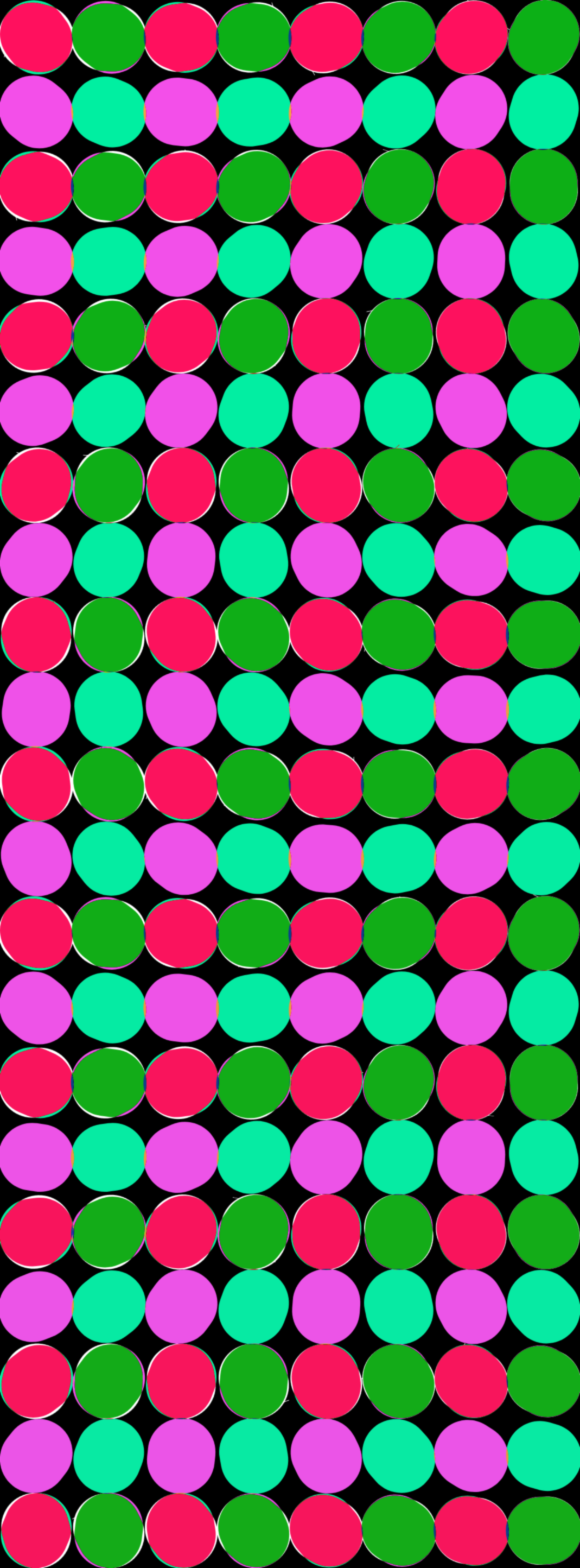
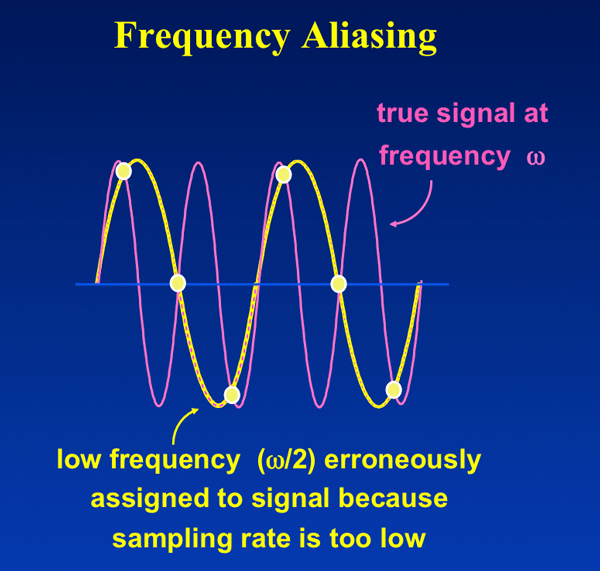
In writing this program, I re-discovered the concept of aliasing from my signal processing classes. Since each new rectangle was rotated counterclockwise by some amount relative to its neighbor, if it was rotated by more than 180 degrees, it would appear like it was being rotated clockwise instead. This effect is why sometimes on TV it will look like car wheels are rotating backwards.
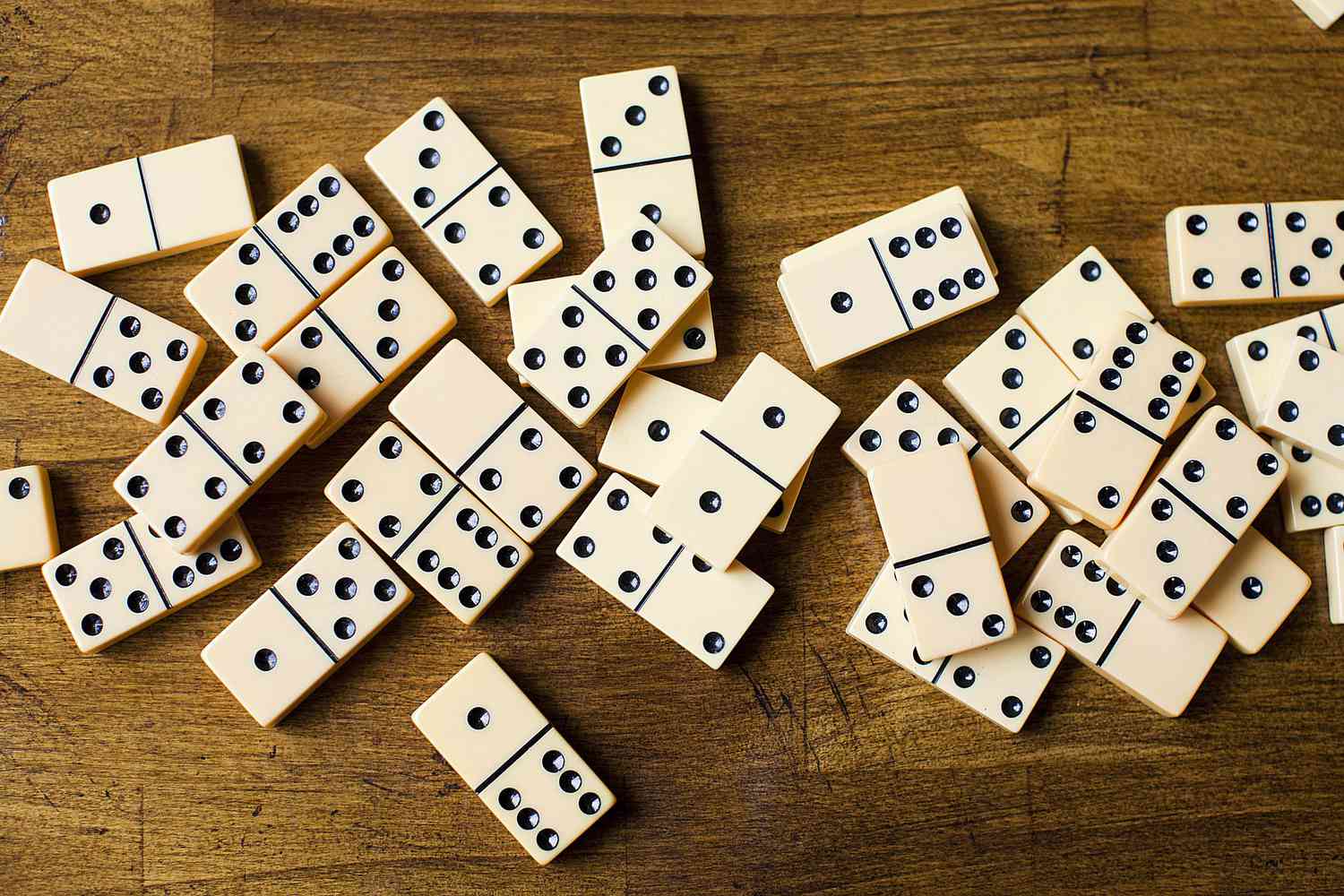
Dominoes inspired me for this one. Fun fact: each image took 30 minutes or less to render.
In ths piece I played around with non-square canvas sizes, i.e. rectanges on a rectangluar canvas. I also played around with drawing random lines within each rectangle but that wasn't super fruitful. My intent with that was to have them be larger, multicolored, and eventually blurred inside of the rectangle to give it a stained glass appearance.